永生化的小鼠近端小管KPT11細胞 | Immortalized Mouse Proximal Tubule KPT11 Cells 貨號T0640
| 代理廠牌: |  |
| 原廠連結: | |
| 相關下載: |
Abmgood不朽化系列商品 (immortalized cell)
Immortalized Mouse Proximal Tubule KPT11 Cells
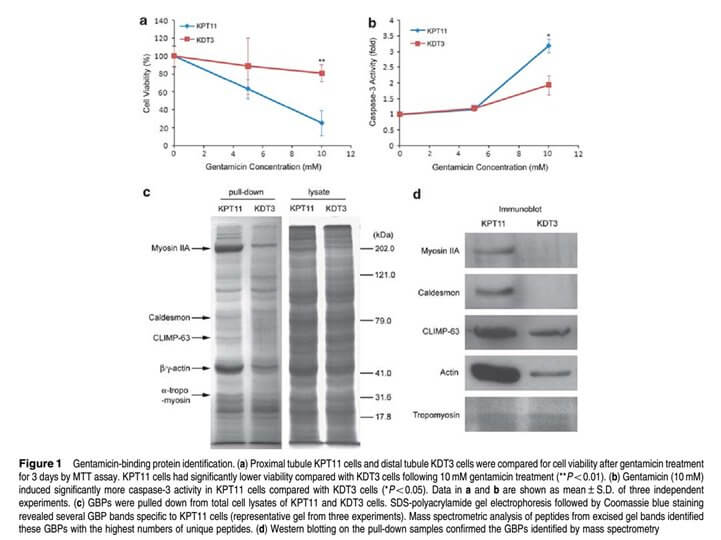
永生化的小鼠近端小管KPT11細胞是來自鼠腎的自發永生細胞。 KPT11細胞對gentamicin慶大霉素處理更敏感,因為與永生化小鼠遠端小管KDT3細胞(abm,T0641)相比,觀察到gentamicin慶大霉素誘導的毒性。 發現KPT11細胞具有更高密度的gentamicin慶大霉素結合蛋白,例如CLIMP-63。 該細胞係是用於研究gentamicin慶大霉素結合蛋白的機制和慶大霉素在細胞凋亡中的作用的有價值的細胞工具。
永生化的小鼠近端小管KPT11細胞。細胞特性: Adherent / Morphology Fibroblast-like | 不杇方法: Spontaneously immortalization | 來源Kidney。細胞培養條件: 使用PriCoat™T25培養瓶 (貨號G299),以最佳化初代和不朽細胞的生長、增殖和擴增。或塗層細胞外基質(Applied Cell Extracellular Matrix) 增強細胞貼附 (貨號G422)。Grow cells in ECM-coated culture vessels with the following conditions. 培養液PriGrow VI (TM016) 。為了製備完整的生長培養基,將下列組分添加到基礎培養基中:胎牛血清(TM999)至最終濃度10%,Penicillin/Streptomycin青黴素/鏈黴素溶液(G255)至最終濃度為1%。二氧化碳(CO2):5%,溫度:37.0℃
產品資料請按這PriCoat™ T25 Flasks | type I collagen coating | I 型膠原(type I collagen) | Applied Cell Extracellular Matrix | Prigrow III Medium初代細胞培養液
HOT!! 黴漿菌PCR偵測 | DAPI染核 | 細胞內黴漿菌去除劑 | 水浴槽抑菌劑 | 噴霧式去黴劑 等系列商品
Abmgood不朽化系列商品 (immortalized reagenet) Ready-to-use
Abmgood公司於人類與老鼠不朽之細胞株上,具有幾十年的實驗經驗;提供一系列不朽 (immortalized)化之細胞株、及不朽化之試劑商品。ready-to-use定量好之retrovirus、lentiviru、 adenovirus,可直接加於細胞中進行感染表現;病毒液包括有SV40重組病毒、EBV重組病毒、hTERT病毒液、Myc基因病毒液、p53基因病毒液、Rb基因病毒液、Ras基因病毒液。提供106及109兩種包裝力價之病毒液;亦提供一系列病毒力價濃縮與定量試劑商品。
細胞不朽化的工具中,SV40 T antigen是最簡單且最常用來造成不朽化細胞生成的方法。多數的病毒基因和抑癌基因(p53、Rb等)的不活化相關,會誘導細胞處於replicative senescence的階段。目前也有研究顯示被感染的細胞,SV40 T anbtigen會誘導端粒酶(Telomerase)的活性。與端粒(telomere)長度相關的Telomerase Reverse Transcriptase protein (TERT)是一種不朽細胞的研究應用。平常細胞中,hTERT是處於不活化態,必要時會進行活化保持telomere的長度,避免細胞發生replicative senescence的現象。某些細胞hTERT 過度表現(over-expression)對於誘發細胞不朽化是無效的(如初代上皮細胞),反而會造成細胞死亡;同時表現hTERT catalytic subunit以及p53或RB siRNA在人類初代卵巢上皮細胞會造成細胞不朽化。過度表現Ras或Myc T58A mutants也有初代細胞不朽化的現象產生。
| Cat. No. | T0640 |
| Name | Immortalized Mouse Proximal Tubule KPT11 Cells |
| Description | Immortalized Mouse Proximal Tubule KPT11 Cells are spontaneously immortal derived cells from murine kidney. KPT11 cells are more susceptible to gentamicin treatments, as gentamicin-induced toxicity was observed compared to the Immortalized Mouse Distal Tubule KDT3 Cells (Cat. No. T0641). It is found that the KPT11 cells have a higher density of gentamicin-binding proteins, such as CLIMP-63. This cell line is a valuable tool for studies relating to the mechanisms of the gentamicin-binding proteins and effects of gentamicin in apoptosis. |
| Organism | Mouse (M. musculus) |
| Tissue | Kidney |
| Growth Properties | Adherent, fibroblast-like |
| Cell Type | Immortalized Cells |
| Storage Condition | Vapor phase of liquid nitrogen, or below -130°C. |
| Shipping Conditions | Ship with dry ice. |
| Product Format | Frozen |
| Intended Use | This product is intended for laboratory research use only. It is not intended for any animal or human therapeutic use, any human or animal consumption, or any diagnostic use. |
| BioSafety | II |
| Certificate of Analysis | For batch-specific test results, refer to the applicable certificate of analysis that can be found at www.abmgood.com. |
| Growth Conditions | Use of PriCoat™ T25 Flasks (G299) or Applied Cell Extracellular Matrix (G422) is required for cell adhesion to the culture vessels. PriGrow VI (TM016) + 10% FBS + 1% Penicillin/Streptomycin Solution (G255), 37.0°C, 5% CO₂ |
| Unpacking and Storage Instructions |
1. Visually examine the packaging containers for signs of leakage or breakage. 2. Immediately transfer frozen cells from dry ice packaging to a temperature below -130°C, preferably in liquid nitrogen vapor phase storage, until ready for use. To ensure the highest level of viability, thaw the vial and initiate culture as soon as possible upon receipt. If continued storage is desired, the vial should only be stored below -130°C or in liquid nitrogen vapor phase. Do not store at -70°C, as it will result in loss of viability. |
| Thawing Protocol |
1. Thaw cells quickly in a 37°C water bath while agitating gently (maximum 2 minutes). The vial cap should be kept above the water level to minimize the risk of contamination. 2. Decontaminate the vial by spraying and wiping the exterior of the vial with 70% ethanol. From this point onwards, all operations should be strictly carried out inside a biological safety cabinet using aseptic conditions. 3. Transfer the cell suspension into a 15ml sterile conical tube containing 5ml of pre-warmed, complete growth media. Centrifuge cells at 125xg for 5-7 minutes. 4. Aspirate the supernatant without disturbing the cell pellet. Re-suspend the cell pellet in the recommended pre-warmed, complete growth media and dispense into a T25 culture flask. 5. Incubate the cells at the recommended conditions. |
| Subculture Protocol |
Volumes given below are for a T75 flask; proportionally increase or decrease the volume as required per culture vessel size. Subculture cells once the culture vessel is 80% confluent. 1. Aspirate the culture media, and add 2-3ml of pre-warmed 0.25% Trypsin-EDTA to the culture vessel. 2. Observe the cells under a microscope to confirm detachment (typically within 2-10 minutes). Cells that are difficult to detach can be put in 37°C, for several minutes to facilitate detachment. 3. Neutralize Trypsin-EDTA by adding an equal volume of the complete growth media into the culture vessel. 4. Transfer the culture suspension into a sterile centrifuge tube, and centrifuge at 125xg for 5 minutes. The actual centrifuge duration and speed may vary depending on the cell type. 5. Aspirate the supernatant, and re-suspend the pellet with pre-warmed fresh complete growth media. Add appropriate aliquots of the cell suspension to new culture vessels, as desired. 6. Incubate the cells at the recommended conditions. |
| Cryopreservation | Cryopreservation Medium (TM024), or complete growth media with 10% DMSO. |
| Seeding Density (cells/cm2) | 20,000 – 50,000 |
| Immortalization Method | Spontaneous immortalization |
| Expression | CLIMP-63 |
| Material Citation | If use of this material results in a scientific publication, please cite the material in the following manner: Applied Biological Materials Inc, Cat. No. T0640. |
| Warranty | abm warrants that cell lines shall be viable upon initiation of culture for a period of thirty (30) days after shipment and that they shall meet the specifications on the applicable abm Material Product Information sheet, certificate of analysis, and/or catalog description. Such thirty (30) day period is referred to herein as the “Warranty Period”. |
| Disclaimer |
1. All test parameters provided in the CoA are conducted using abm‘s standardized culture system and The stated values may vary under the end-user’s culture conditions. Please verify that the product is suitable for your studies by referencing published papers or ordering RNA (0.5 μg, Cat.# C207, $450.00) or cell lysate (100 μg, Cat.# C206, $600.00) to perform preliminary experiments, or alternatively use our Gene Expression Assay Service (Cat# C138). All sales are final.
2. We recommend live cell shipments for ease of cell transfer and this option can be requested at the time of order placement. Please note that the end-user will need to evaluate the feasibility of live cell shipment by taking into account the final destination’s temperature variation and its geographical location.
3. All of abm‘s cell biology products are for research use ONLY and NOT for therapeutic/diagnostic applications. abm is not liable for any repercussions arising from the use of its cell biology product(s) in therapeutic/diagnostic or any other non-RUO application(s).
4. abm makes no warranties or representations as to the accuracy of the information on this site. Citations from literature are provided for informational purposes only. abm does not warrant that such information has been shown to be accurate.
5. abm warrants that cell lines shall be viable upon initiation of culture for a period of thirty (30) days after shipment and that they shall meet the specifications on the applicable abm Material Product Information sheet, certificate of analysis, and/or catalog description. Such thirty (30) day period is referred to herein as the “Warranty Period”.
|
| Depositor | Oregon Health & Science University |
| Application | Research Use Only. |