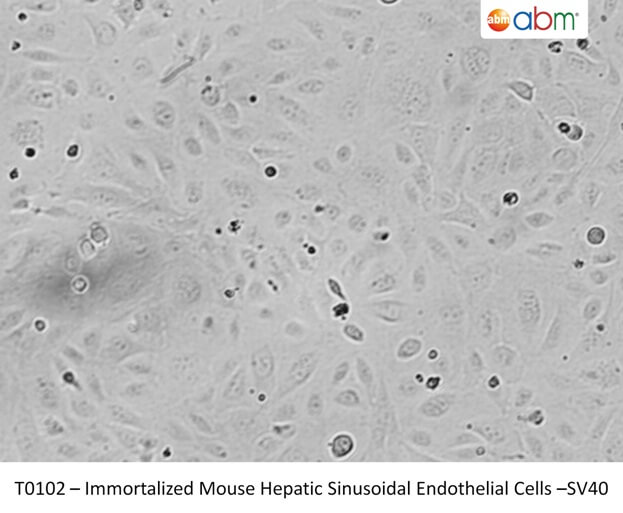
永生化小鼠肝竇內皮細胞-SV40 | Hepatic Sinusoidal Endothelial Cells- SV40貨號T0102
| 代理廠牌: |  |
| 原廠連結: | |
| 相關下載: |
細胞系列商品 (immortalized cell)-LSEC
永生化小鼠肝竇內皮細胞-SV40 (貨號T0102) Hepatic Sinusoidal Endothelial Cells- SV40
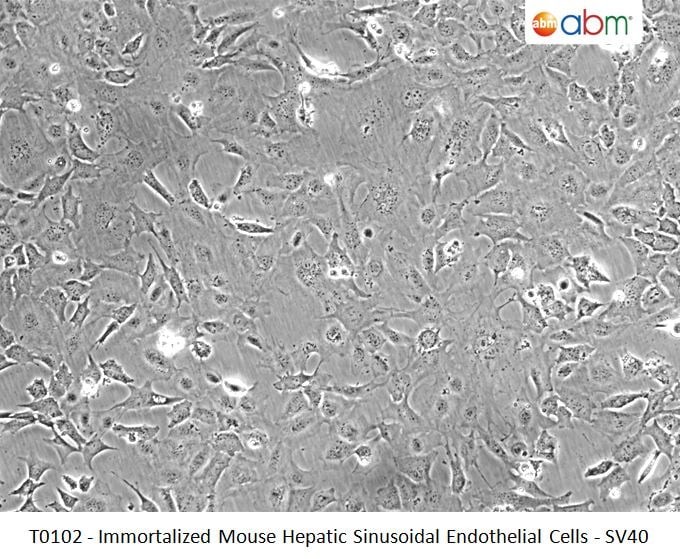
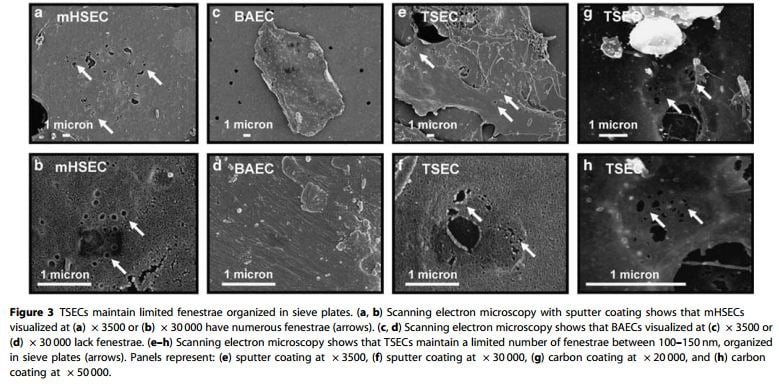
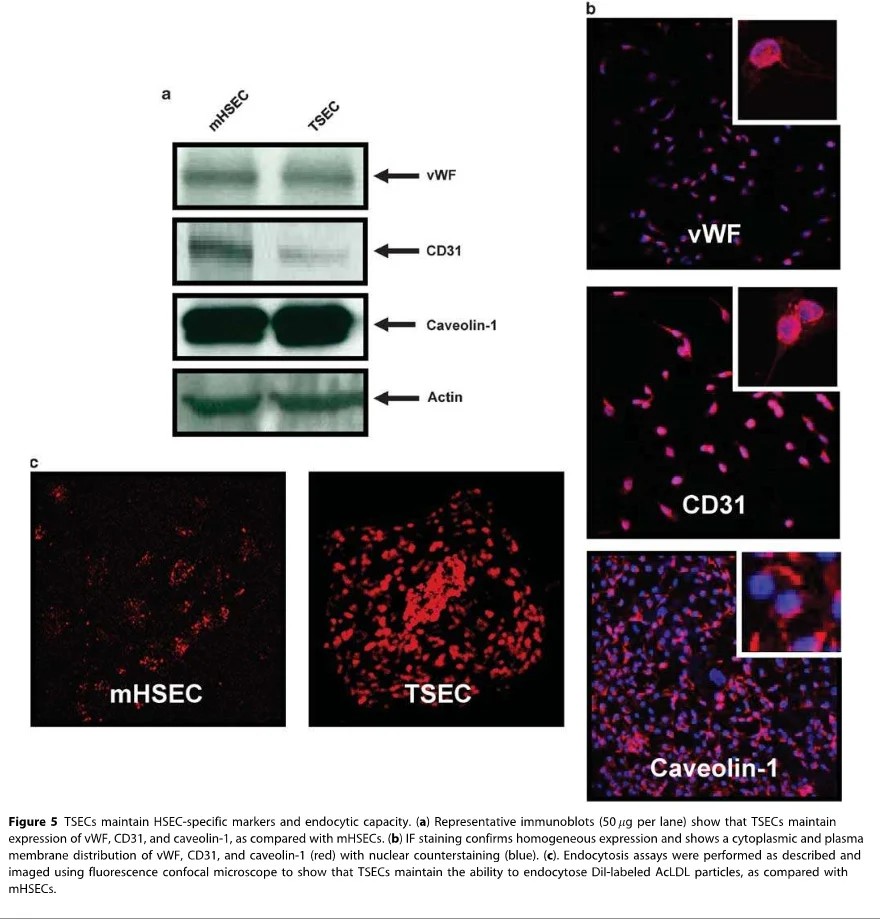
肝竇內皮細胞(LSEC, Liver sinusoidal endothelial cells)在肝竇和底層實質之間形成獨特的屏障,因此在維持代謝和免疫穩態以及積極促進疾病病理生理學方面發揮至關重要的作用。肝竇內皮細胞(LSEC, Liver sinusoidal endothelial cells)是高度特化的內皮細胞,代表一側的血球與另一側的肝細胞和肝星狀細胞之間的界面。肝竇內皮細胞(LSEC, Liver sinusoidal endothelial cells)是一種獨特的肝臟亞群,肝臟sinusoids。它們的作用涉及清除血液中的廢物,調節周邊細胞的收縮性和先天的免疫功能。永生化的小鼠Hepatic Sinusoidal Endothelial Cells- SV40來自鼠HSECs,其保持內皮特徵和(LSEC, Liver sinusoidal endothelial cells)特異性特徵,例如vWF和caveolin -1。 這些細胞也響應於血管生成因子,形成血管管狀結構,內切細胞乙酰化低密度脂蛋白(endycytose acetylated low-density lipoprotein , AcLDL)和分泌蛋白質涉及基質重塑(remodelling)。 此外,這些細胞容易被retrovirus逆轉錄病毒轉導。 永生化Mouse Hepatic Sinusoidal Endothelial Cells- SV40因此適用於研究肝內皮細胞生物學,包括運動和血管生成之研究。
永生化小鼠肝竇內皮細胞-SV40特性
1.能夠吞噬AcLDL;
2.增加對VEGF和FGF的遷移率; 能形成強壯的血管管樣結構;
4.逆轉錄病毒的轉導效率為90%;
5.耐血清飢餓。

| BioSafety Level | II |
| Organism | Mus musculus |
| Source Organ | Liver |
| Growth Properties | Adherent |
| Morphology | Cobblestone-like |
| Population Doubling | 22-32 hours |
| Recommended Seeding Density | 5,000-7,000 cells/cm2 |
| Markers | vWF and caveolin-1 |
小鼠肝肝竇內皮細胞-SV40 細胞特性: Adherent / Cobblestone-like | 來源Liver。細胞培養條件: 使用PriCoat™T25培養瓶 (貨號G299) 以最佳化初代和不朽細胞的生長、增殖和擴增。或塗層細胞外基質(Applied Cell Extracellular Matrix) 增強細胞貼附 (貨號G422)。Grow cells in ECM-coated culture vessels with the following conditions. Complete growth medium培養液PriGrowI (貨號TM001 ),胎牛血清(Cat. No. TM999)最終濃度為10%並填加1% Penicillin/Streptomycin 。1%. Atmosphere: air, 95%; Carbon dioxide (CO2), 5%. Temperature: 37.0°C
| Cat. No. | T0102 |
| Name | Immortalized Mouse Hepatic Sinusoidal Endothelial Cells – SV40 |
| Description | Hepatic sinusoidal endothelial cells (HSECs) are an unique sub-population of liver cells that line the hepatic sinusoids. Their role involves clearing waste products from the blood, regulating pericyte contractility and innate immune functions. The Immortalized Mouse Hepatic Sinusoidal Endothelial Cells – SV40 is derived from C57BL/6 mouse HSECs that have maintained endothelial characteristics and HSEC-specific features such as vWF and caveolin-1. These cells also migrate in response to angiogenici growth factors, form vascular tube-like structures, endycytose acetylated low-density lipoprotein (AcLDL) and secrete proteins involved in matrix remodelling. In addition, these cells are easily transduced by retrovirus. The Immortalized Mouse Hepatic Sinusoidal Endothelial Cells- SV40 is therefore suitable for studying liver endothelial cell biology, including motility and angiogenesis. |
| Organism | Mouse (M. musculus) |
| Tissue | Liver |
| Donor History | C57BL/6 mouse |
| Growth Properties | Adherent, polygonal |
| Cell Type | Immortalized Cells |
| Storage Condition | Vapor phase of liquid nitrogen, or below -130°C. |
| Shipping Conditions | Ship with dry ice. |
| Product Format | Frozen |
| Intended Use | This product is intended for laboratory research use only. It is not intended for any animal or human therapeutic use, any human or animal consumption, or any diagnostic use. |
| BioSafety | II |
| Certificate of Analysis | For batch-specific test results, refer to the applicable certificate of analysis that can be found at www.abmgood.com. |
| Growth Conditions | Use of PriCoat™ T25 Flasks (G299) or Applied Cell Extracellular Matrix (G422) is required for cell adhesion to the culture vessels. PriGrow I (TM001) + 5% FBS + 1% Penicillin/Streptomycin Solution (G255), 37.0°C, 5% CO₂ |
HOT!! 黴漿菌PCR偵測 | DAPI染核 | 細胞內黴漿菌去除劑 | 水浴槽抑菌劑 | 噴霧式去黴劑 等系列商品
Unpacking and Storage Instructions
1. Visually examine the packaging containers for signs of leakage or breakage.
2. Immediately transfer frozen cells from dry ice packaging to a temperature below -130°C, preferably in liquid nitrogen vapor phase storage, until ready for use.
To ensure the highest level of viability, thaw the vial and initiate culture as soon as possible upon receipt. If continued storage is desired, the vial should only be stored below -130°C or in liquid nitrogen vapor phase. Do not store at -70°C, as it will result in loss of viability.
Thawing Protocol
1. Thaw cells quickly in a 37°C water bath while agitating gently (maximum 2 minutes). The vial cap should be kept above the water level to minimize the risk of contamination.
2. Decontaminate the vial by spraying and wiping the exterior of the vial with 70% ethanol. From this point onwards, all operations should be strictly carried out inside a biological safety cabinet using aseptic conditions.
3. Transfer the cell suspension into a 15ml sterile conical tube containing 5ml of pre-warmed, complete growth media. Centrifuge cells at 125xg for 5-7 minutes.
4. Aspirate the supernatant without disturbing the cell pellet. Re-suspend the cell pellet in the recommended pre-warmed, complete growth media and dispense into a T25 culture flask.
5. Incubate the cells at the recommended conditions.
Subculture Protocol
Volumes given below are for a T75 flask; proportionally increase or decrease the volume as required per culture vessel size. Subculture cells once the culture vessel is 80% confluent.
1. Aspirate the culture media, and add 2-3ml of pre-warmed 0.25% Trypsin-EDTA to the culture vessel.
2. Observe the cells under a microscope to confirm detachment (typically within 2-10 minutes). Cells that are difficult to detach can be put in 37°C, for several minutes to facilitate detachment.
3. Neutralize Trypsin-EDTA by adding an equal volume of the complete growth media into the culture vessel.
4. Transfer the culture suspension into a sterile centrifuge tube, and centrifuge at 125xg for 5 minutes. The actual centrifuge duration and speed may vary depending on the cell type.
5. Aspirate the supernatant, and re-suspend the pellet with pre-warmed fresh complete growth media. Add appropriate aliquots of the cell suspension to new culture vessels, as desired.
6. Incubate the cells at the recommended conditions.
Cryopreservation
Cryopreservation Medium (TM024), or complete growth media with 10% DMSO.
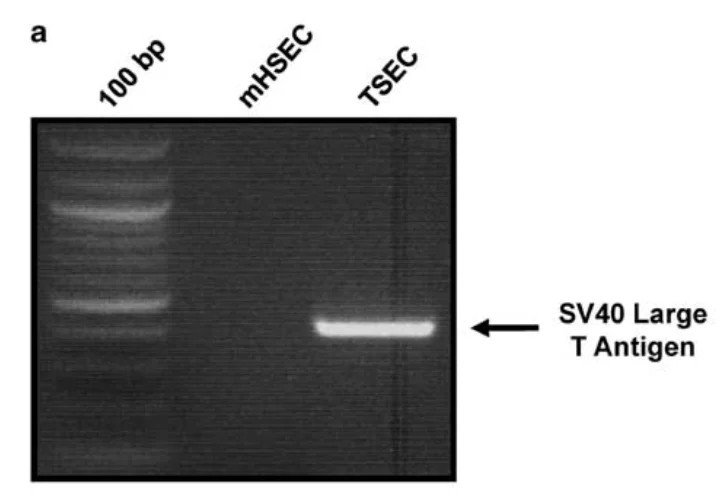
Seeding Density (cells/cm2)5,000 – 7,000Split Ratio1:2 to 1:3Population Doubling Time (h)22 – 32Immortalization MethodSerial passaging and transduction with pantropic recombinant retroviruses carrying SV40 Large T antigenExpression
vWF and caveolin-1
Material CitationIf use of this material results in a scientific publication, please cite the material in the following manner: Applied Biological Materials Inc, Cat. No. T0102.