Mouse Anti-Human CD107a-UNLB (H4A3)抗體 | LAMP1 Southernbiotech貨號9835-01

| 代理廠牌: |  |
| 原廠連結: | |
| 相關下載: |
Mouse Anti-Human CD107a-UNLB (H4A3)抗體 | LAMP1 Southernbiotech貨號9835-01
細胞免疫專家極力推薦SouthernBiotech高品質二級抗體
美國抗體生產商Southern Biotech於1982年,由UAB細胞免疫專家Dr. Max Cooper與實驗室成員共同創立。SouthernBiotech致力於生產高品質二級抗體。物種種類齊全,包括有Bovine、Canine、Chicken、Cynomolgus、Donkey、Equine、Feline、Goat、Guinea Pig、Hamster、Human、Monkey、Mouse、Porcine、Rabbit、Rat、Rhesus、Sheep、Turkey。具有螢光物質(FITC、PE、APC、SPRD、PE/CY5.5、APC/CY5.5、Spectral Red、Alexa 488、Alexa 647、Pacific Blue)各種螢光標誌、另具酵素(HRP、AP)、或未標誌及Low Endotoxin/Azide Free(LE/AF)等標定。
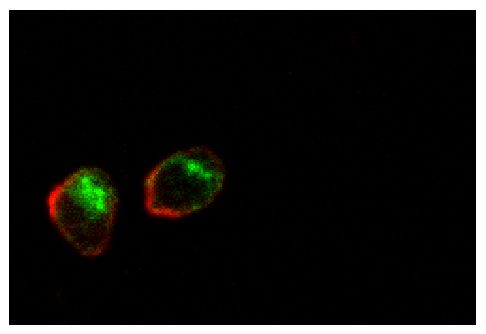
CD107a,也稱為溶酶體相關膜蛋白 1 (lysosomal-associated membrane protein 1, LAMP-1),是一種高度糖基化的 I 型跨膜蛋白(glycosylated type I transmembrane protein),構成溶酶體膜( lysosomal membranes)上的主要唾液酸糖蛋白(sialoglycoproteins)。它是 Galaptin(一種存在於細胞外基質中的 S 型凝集素)的配體,通過識別乙醯基乳糖胺寡糖鏈,並且是 E-選擇素介導( E-selectin-mediated )的細胞粘附(cell adhesion)的配體。 CD107a 由活化的 T 細胞( T cells)、巨噬細胞(macrophages)、樹突狀細胞(dendritic cells)、活化的血小板( activated platelets)、扁桃體上皮和一些腫瘤細胞系(包括 U937 和 KG1a)表達。它也是一種廣泛表達的細胞內抗原。 LAMP-1 (lysosomal-associated membrane protein 1, LAMP-1)可能通過形成溶酶體水解酶( lysosomal hydrolases)屏障來保護溶酶體膜的內表面。腫瘤細胞系表面上 CD107a 和 CD107b 的上調與其增強的轉移潛力相關,其中它們可能增加與細胞外基質(extracellular matrix)和內皮( endothelium)的粘附。
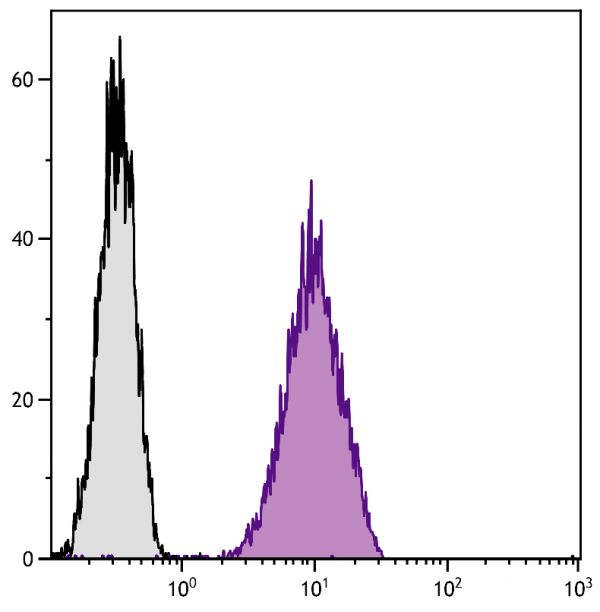

Mouse Anti-Human CD107a (LAMP1)抗體產品資料
| Clone | H4A3 |
|---|---|
| Isotype | Mouse (BALB/c) IgG1κ |
| Isotype Control | Mouse IgG1-UNLB (15H6) |
| Specificity | Human/Rhesus/African Green Monkey/Pigtail Macaque/Sooty Mangabey CD107a |
| Alternative Names | LAMP-1, lysosome-associated membrane protein 1 |
| Description | CD107a, also known as lysosomal-associated membrane protein 1 (LAMP-1), is a heavily glycosylated type I transmembrane protein that constitutes the major sialoglycoproteins on lysosomal membranes. It is a ligand for galaptin, an S-type lectin present in extracellular matrix, through its recognition of acetyllactosamine oligosaccharide chains, and is a ligand for E-selectin-mediated cell adhesion. CD107a is expressed by activated T cells, macrophages, dendritic cells, activated platelets, tonsillar epithelium, and some tumor cell lines, including U937 and KG1a. It is also a widely expressed intracellular antigen. LAMP-1 may function in protecting the inner surface of the lysosomal membrane by forming a barrier to lysosomal hydrolases. The upregulation of both CD107a and CD107b on the surface of tumor cell lines has been associated with their enhanced metastatic potential where they may increase adhesion to extracellular matrix and endothelium. |
| Immunogen | Human adherent peripheral blood cells |
| Conjugate | UNLB (Unconjugated) |
| Buffer Formulation | Borate buffered saline, pH 8.2 |
| Clonality | Monoclonal |
| Concentration | 0.1 mg/mL |
| Volume | 1.0 mL |
| Recommended Storage | 2-8°C |
| Applications | Flow Cytometry – Quality tested 1,12-19,21,22 Immunohistochemistry-Frozen Sections – Reported in literature 2 Immunohistochemistry-Paraffin Sections – Reported in literature 3,4 Immunocytochemistry – Reported in literature 5-10,20 Electron Microscopy – Reported in literature 1 Immunoprecipitation – Reported in literature 1,5,6 Western Blot – Reported in literature 11 Purification – Reported in literature 1 |
| RRID Number | AB_2797102 |
| Gene ID | 3916 (Human) 697331 (Rhesus) 103214841 (Green Monkey) 105485253 (Pigtail Macaque) 105584952 (Sooty Mangabey) |
| Gene ID Symbol | LAMP1 (Human) LAMP1 (Rhesus) LAMP1 (Green Monkey) LAMP1 (Pigtail Macaque) LAMP1 (Sooty Mangabey) |
| Gene ID Aliases | CD107a; LAMPA; LGP120 |
| UniProt ID | P11279 (Human) |
| UniProt Name | LAMP1_HUMAN (Human) |
相關商品 Isotype control 分型對照組 |分型對照組套組 | 抗體分型ELISA 套組 | anti-rabbit 二級抗體 | anti-mouse二級抗體 |

1. Mane SM, Marzella L, Bainton DF, Holt VK, Cha Y, Hildreth JE, et al. Purification and characterization of human lysosomal membrane glycoproteins. Arch Biochem
Biophys. 1989;268:360-78. (Immunogen, FC, EM, IP, Purification)
2. Momma K, Noguchi S, Malicdan MC, Hayashi YK, Minami N, Kamakura K, et al. Rimmed vacuoles in Becker muscular dystrophy have similar features with inclusion
myopathies. PLoS One. 2012;7:e52002. (IHC-FS)
3. Furuta K, Ikeda M, Nakayama Y, Nakamura K, Tanaka M, Hamasaki N, et al. Expression of lysosome-associated membrane proteins in human colorectal neoplasms and
inflammatory diseases. Am J Pathol. 2001;159:449-55. (IHC-PS)
4. Sarafian VS, Dikov DI. LAMPs and ABH histo-blood group antigens in granulation tissue. APMIS. 2007;115:701-6. (IHC-PS)
5. Hauck CR, Meyer TF. The lysosomal/phagosomal membrane protein h-lamp-1 is a target of the IgA1 protease of Neisseria gonorrhoeae. FEBS Lett. 1997;405:86-90.
(ICC, IP)
6. Dell’Angelica EC, Aguilar RC, Wolins N, Hazelwood S, Gahl WA, Bonifacino JS. Molecular characterization of the protein encoded by the Hermansky-Pudlak syndrome
type 1 gene. J Biol Chem. 2000;275:1300-6. (ICC, IP)
7. Valés-Gómez M, Winterhalter A, Roda-Navarro P, Zimmermann A, Boyle L, Hengel H, et al. The human cytomegalovirus glycoprotein UL16 traffics through the plasma
membrane and the nuclear envelope. Cell Microbiol. 2006;8:581-90. (ICC)
8. Valés-Gómez M, Reyburn HT. Intracellular trafficking of the HCMV immunoevasin UL16 depends on elements present in both its cytoplasmic and transmembrane
domains. J Mol Biol. 2006;363:908-17. (ICC)
9. Hanna MC, Blackstone C. Interaction of the SPG21 protein ACP33/maspardin with the aldehyde dehydrogenase ALDH16A1. Neurogenetics. 2009;10:217-28. (ICC)
10. Al-Zeer MA, Al-Younes HM, Lauster D, Lubad MA, Meyer TF. Autophagy restricts Chlamydia trachomatis growth in human macrophages via IFNG-inducible guanylate
binding proteins. Autophagy. 2013;9:50-62. (ICC)
11. Armstrong A, Mattsson N, Appelqvist H, Janefjord C, Sandin L, Agholme L, et al. Lysosomal network proteins as potential novel CSF biomarkers for Alzheimer’s disease.
Neuromolecular Med. 2014;16:150-60. (WB)
12. Hershkovitz O, Rosental B, Rosenberg LA, Navarro-Sanchez ME, Jivov S, Zilka A, et al. NKp44 receptor mediates interaction of the envelope glycoproteins from the West
Nile and dengue viruses with NK cells. J Immunol. 2009;183:2610-21. (FC)
13. Kozako T, Yoshimitsu M, Fujiwara H, Masamoto I, Horai S, White Y, et al. PD-1/PD-L1 expression in human T-cell leukemia virus type 1 carriers and adult T-cell
leukemia/lymphoma patients. Leukemia. 2009;23:375-82. (FC)
14. Kozako T, Yoshimitsu M, Akimoto M, White Y, Matsushita K, Soeda S, et al. Programmed death-1 (PD-1)/PD-1 ligand pathway-mediated immune responses against
human T-lymphotropic virus type 1 (HTLV-1) in HTLV-1-associated myelopathy/tropical spastic paraparesis and carriers with autoimmune disorders. Hum Immunol.
2011;72:1001-6. (FC)
15. Rosental B, Brusilovsky M, Hadad U, Oz D, Appel MY, Afergan F, et al. Proliferating cell nuclear antigen is a novel inhibitory ligand for the natural cytotoxicity receptor
NKp44. J Immunol. 2011;187:5693-702. (FC)
16. Jaron-Mendelson M, Yossef R, Appel MY, Zilka A, Hadad U, Afergan F, et al. Dimerization of NKp46 receptor is essential for NKp46-mediated lysis: characterization of the
dimerization site by epitope mapping. J Immunol. 2012;188:6165-74. (FC)
17. Genescà M, Skinner PJ, Bost KM, Lu D, Wang Y, Rourke TL, et al. Protective attenuated lentivirus immunization induces SIV-specific T cells in the genital tract of rhesus
monkeys. Mucosal Immunol. 2008;1:219-28. (FC, Rhesus Reactivity)
18. Magalhaes I, Vudattu NK, Ahmed RK, Kühlmann-Berenzon S, Ngo Y, Sizemore DR, et al. High content cellular immune profiling reveals differences between rhesus
monkeys and men. Immunology. 2010;131:128-40. (FC, Rhesus Reactivity)
19. Cicin-Sain L, Sylwester AW, Hagen SI, Siess DC, Currier N, Legasse AW, et al. Cytomegalovirus-specific T cell immunity is maintained in immunosenescent rhesus
macaques. J Immunol. 2011;187:1722-32. (FC, Rhesus Reactivity)
20. Sauer J, Shannon JG, Howe D, Hayes SF, Swanson MS, Heinzen RA. Specificity of Legionella pneumophila and Coxiella burnetii vacuoles and versatility of Legionella
pneumophila revealed by coinfection. Infect Immun. 2005;73:4494-504. (ICC, African Green Monkey Reactivity)
21. Jegaskanda S, Amarasena TH, Laurie KL, Tan H, Butler J, Parsons MS, et al. Standard trivalent influenza virus protein vaccination does not prime antibody-dependent
cellular cytotoxicity in macaques. J Virol. 2013;87:13706-18. (FC, Pigtail Macaque Reactivity)
22. Dunham R, Pagliardini P, Gordon S, Sumpter B, Engram J, Moanna A, et al. The AIDS resistance of naturally SIV-infected sooty mangabeys is independent of cellular
immunity to the virus. Blood. 2006;108:209-17. (FC, Sooty Mangabey Reactivity)